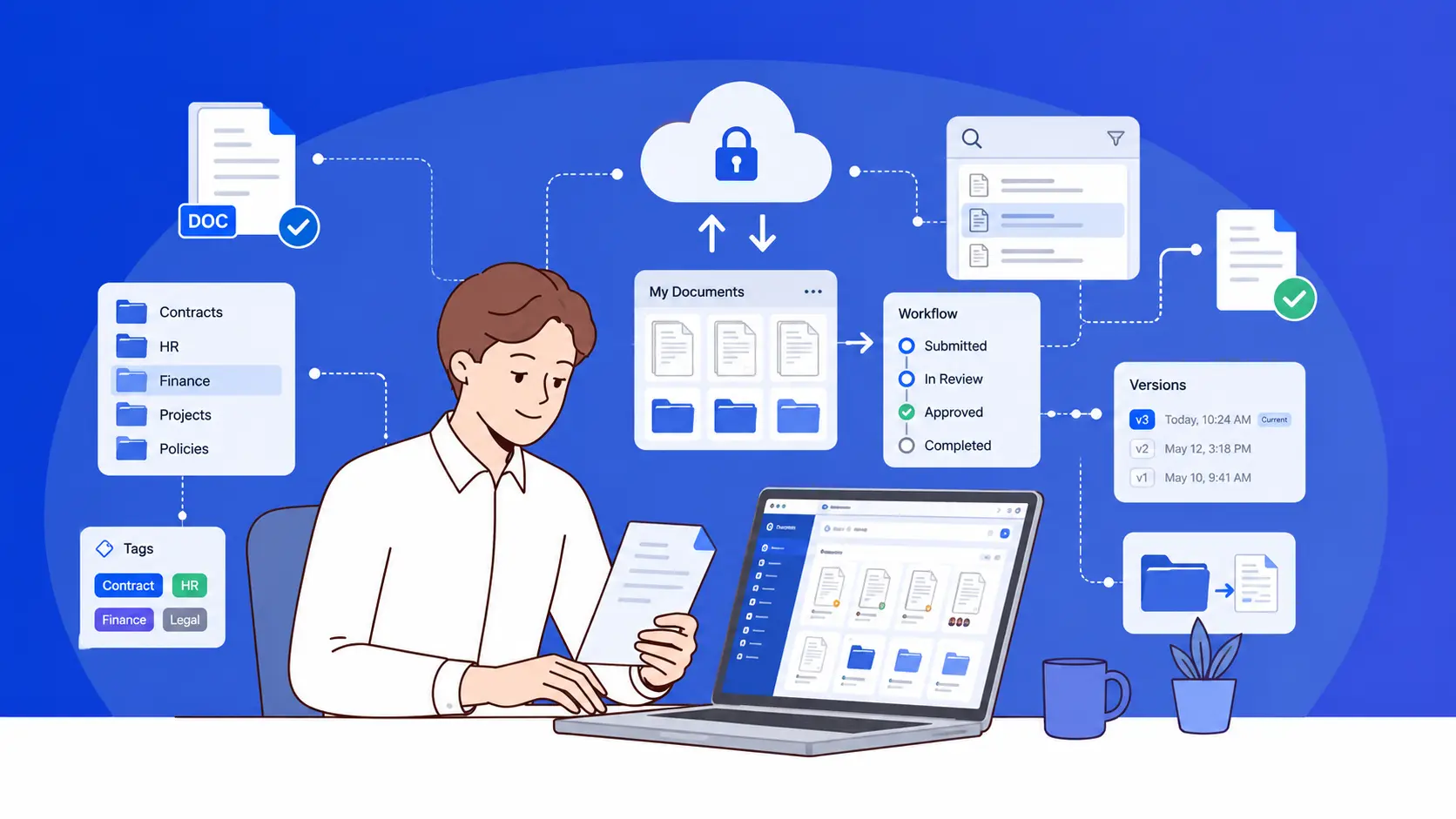
Let’s cut straight to the chase. Regulatory compliance software is a structured digital system that helps organisations manage, control and prove they are meeting legal, regulatory and industry obligations. It centralises policies and procedures, automates review and approval workflows, maintains version control, and produces audit-ready records.
The reason it’s essential is because regulatory expectations are growing more complex and more visible — and without dedicated compliance management software, businesses risk outdated documentation, inconsistent processes, failed audits, financial penalties and reputational damage.
To put it another way… compliance can’t be managed reliably through spreadsheets, email chains and shared folders anymore.
Most businesses don’t set out to fall short on compliance. The issues usually stem from growth, complexity and time pressure.
A company adds new staff. It expands into another location. Regulations change. An ISO certification is pursued. Suddenly, policies need reviewing. Procedures require updating. Training records must be tracked. Someone needs to confirm the current version of a document — and no one is entirely sure where it lives.
That’s where regulatory compliance software becomes less of a “nice to have” and more of an operational necessity. Regulators and auditors are no longer satisfied with verbal assurances. They expect traceability. They expect documentation history. They expect evidence that review cycles are followed; not just planned. Without structured compliance management software, organisations often find themselves scrambling to assemble proof after the fact.
One of the most common misconceptions is that compliance is simply about having documents saved somewhere secure. But file storage is not document control. True regulatory compliance software manages the lifecycle of a document — from drafting and review to approval, publication and eventual retirement. It ensures:
Instead of relying on memory or manual follow-ups, the system embeds governance directly into daily workflows. That shift alone reduces risk significantly.
Manual compliance systems tend to work… until they don’t.
They rely heavily on individual people remembering to send reminders, update registers or archive superseded documents. As workloads increase, those tasks slip. Email approvals get buried. Shared drives accumulate duplicate files. Teams unknowingly reference outdated procedures.
The risk isn’t usually dramatic at first. It builds quietly. Then an audit arrives. Or a regulatory review. Or an incident that requires documentary evidence. At that point, the gaps become visible.
Compliance management software reduces this exposure by creating consistency and accountability. The process doesn’t depend on one person’s vigilance – it’s structured and transparent.
There’s another angle that’s often overlooked. Strong regulatory systems don’t just protect against penalties; they improve operational clarity. When documents are controlled and current:
In other words, regulatory compliance software contributes to organisational confidence. It turns compliance from a reactive obligation into a stable framework that supports growth. And for businesses operating in regulated sectors – whether that’s aged care, engineering, construction, finance, real estate or otherwise – that stability is invaluable.
Not all systems deliver the same level of control. Effective regulatory compliance software should provide:
It should enhance how teams work, not create friction. If the software feels overly complex or disconnected from daily operations, adoption suffers. Governance only works when people actually use the system.
At KeyDocs, regulatory compliance software is built around a simple principle: governance should be embedded, not improvised. Rather than replacing existing Microsoft 365 environments, KeyDocs extends them — introducing structured document lifecycle management, automated approvals, version control and compliance reporting within a familiar workspace.
The result is a controlled document environment that provides:
It’s compliance management software designed for organisations that take governance seriously… without overcomplicating the user experience.
Regulation isn’t slowing down. Expectations are increasing, not decreasing. Stakeholders — from regulators to clients — want evidence of control. Businesses that continue relying on manual systems are effectively creating unnecessary risk.
By contrast, organisations that implement structured regulatory compliance software gain clarity, visibility and control. They reduce uncertainty. They respond to audits with confidence. And they position compliance as part of their operational strength, not a recurring vulnerability.
In today’s environment, that distinction matters. Because compliance isn’t just about ticking boxes; it’s about protecting the integrity of the entire organisation.
Check out our other posts!